
Key Features
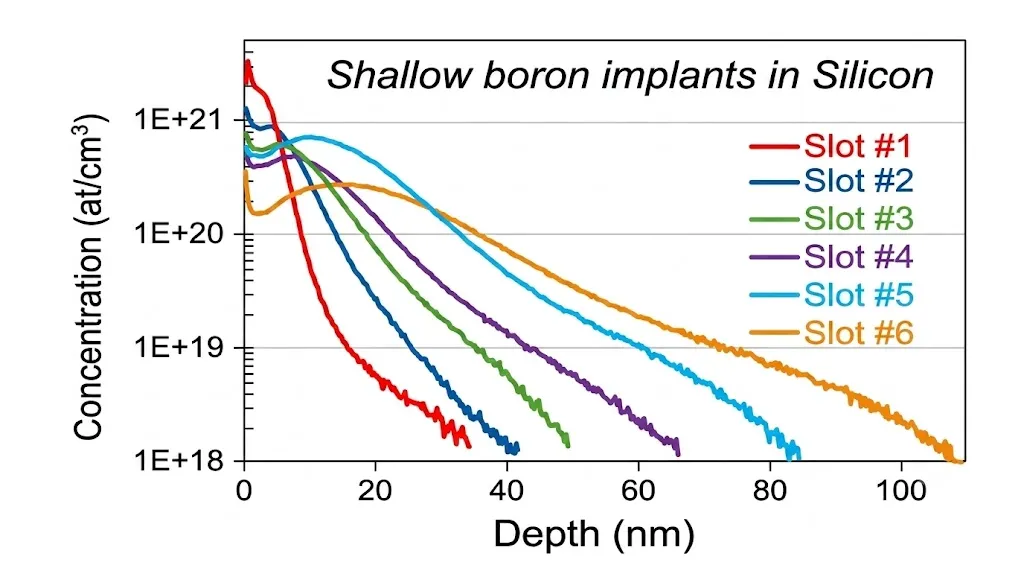
- Outstanding depth resolution: The low-energy collision mode ion source operation (500 eV for O2+) enables detailed analysis of shallow implant surfaces and thin film structures with optimal sensitivity.
- High-throughput automation: The motorized storage chamber automatically changes up to 6 sample trays, combined with automated transfer operations, allowing for the establishment of unattended sequence measurement analysis.
- 3D Ion Imaging capability: Continuously acquire elemental distribution image sequences in depth and reconstruct ultra-microscopic 3D structures through powerful WinImage software.
- Dual O2+ and Cs+ ion source system: Provides rapid sputtering rates with both negative and positive secondary ion analysis modes.
- Automatic charge compensation with NEG gun: The normal incidence electron gun (NEG) eliminates surface charge accumulation effects, ensuring easy and accurate measurements on all insulating materials such as glass and ceramics.
- Grid area software (Checkerboard): Customize the analysis area to eliminate noise effects at the crater edge, helping to improve signal quality with depth in a groundbreaking way.
Detailed description
Advanced double focusing mass spectrometry technology
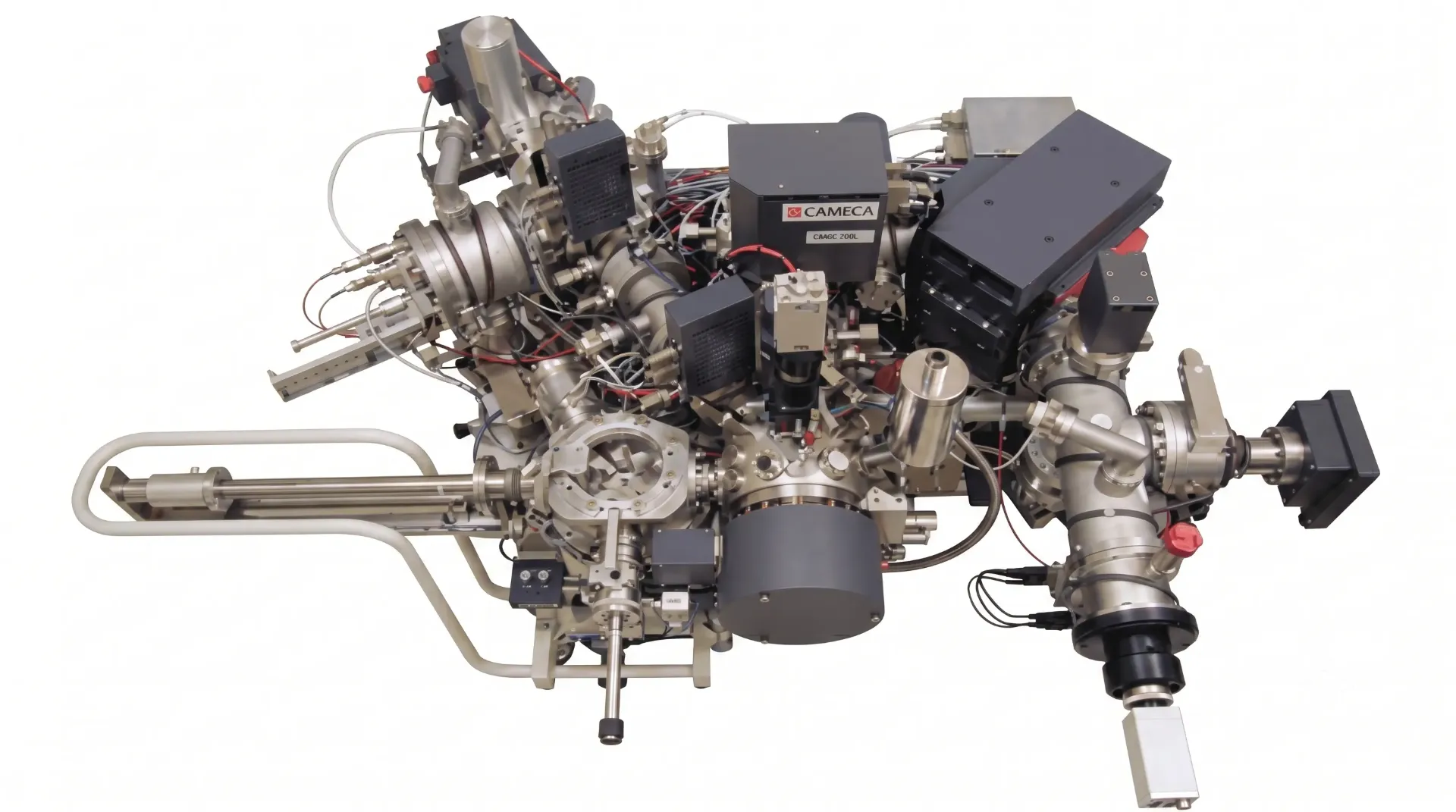
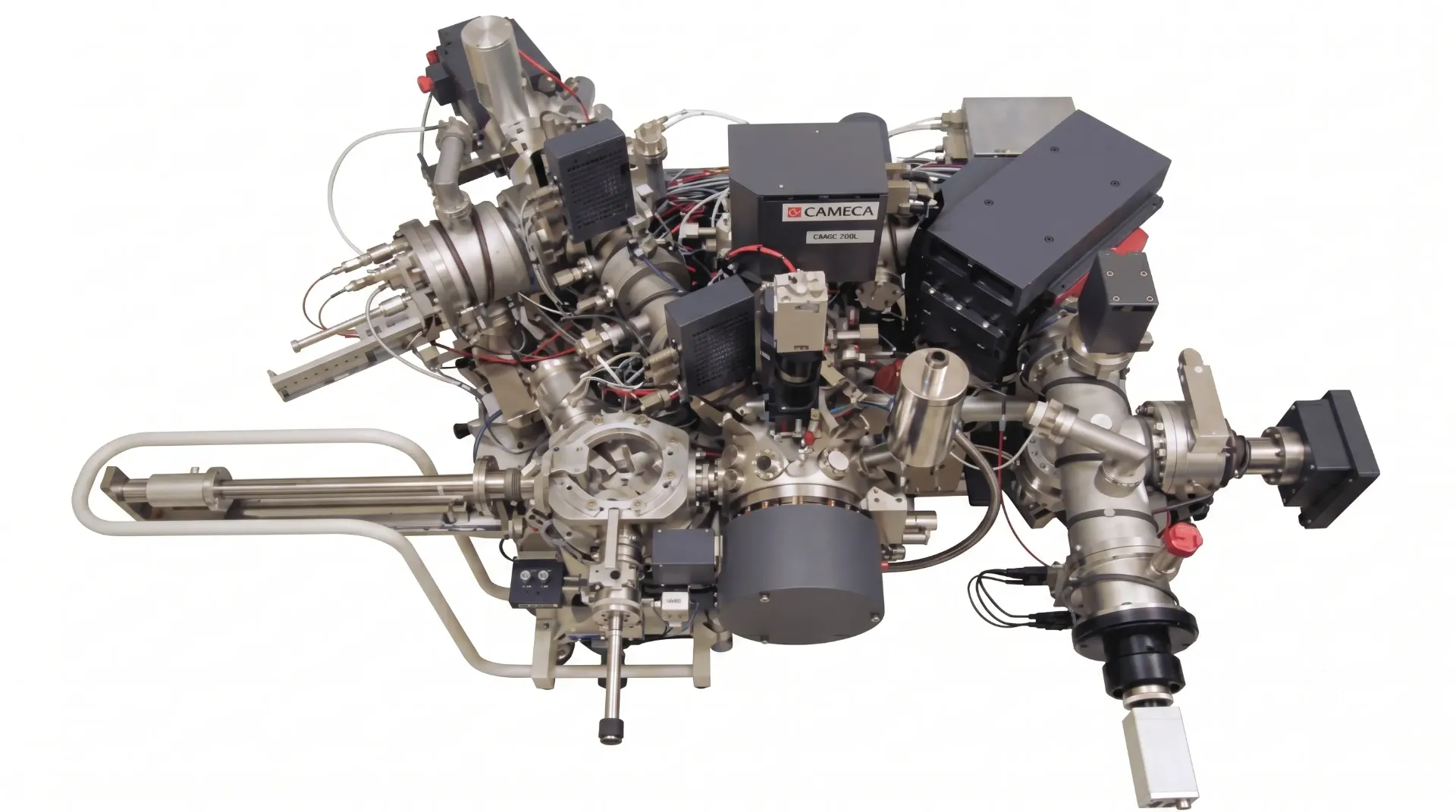
Inherited and developed from CAMECA's renowned system, the IMS 7f-Auto applies magnetic sector double focusing technology with ultra-fast peak switching capability. The unique ion optical structure combined with a detection system that has an extended dynamic range (10 decades) ensures the tool always maintains the highest beam stability. As a result, the device provides unmatched elemental and isotopic analytical sensitivity in the market, with detection limits ranging from ppm down to ultra-trace ppb.
Quantifying noise-free depth for complex materials
In the semiconductor industry or in the production of LED devices and photovoltaic cells, accurately determining the spatial distribution of impurities or dopants at the micro level has always been a significant barrier. The IMS 7f-Auto thoroughly addresses this bottleneck with a NEG electric compensation mechanism for the isolation membrane, and an ultra-high vacuum (UHV) environment that allows for the exclusion of analytical noise from light elements such as Hydrogen, Carbon, Nitrogen, and Oxygen. Furthermore, the integrated Checkerboard feature optimizes the deep computational surface, providing absolutely representative analytical data compared to conventional spectroscopic microscopy techniques.
Industrial-scale automated chain analysis capability
To meet the standards of massive productivity, the IMS 7f-Auto has been redesigned with a motorized sample chamber containing 6 one-inch sample holders, supporting a multi-point remote loading/unloading mechanism. Under the coordination of an advanced application suite, processes from aligning the detector, fine-tuning the image link aperture to calculating the mass chain are automatically activated sequentially. Regardless of independent overnight operation (24h/day), the system maintains excellence in dose reproducibility (Dose reproducibility achieving RSD < 0.5%), freeing technical personnel from manual intervention.