
![youtube - [Video]](/web/image/product.image/430/image_128/youtube%20-%20%5BVideo%5D?unique=1f5a142)
Main features
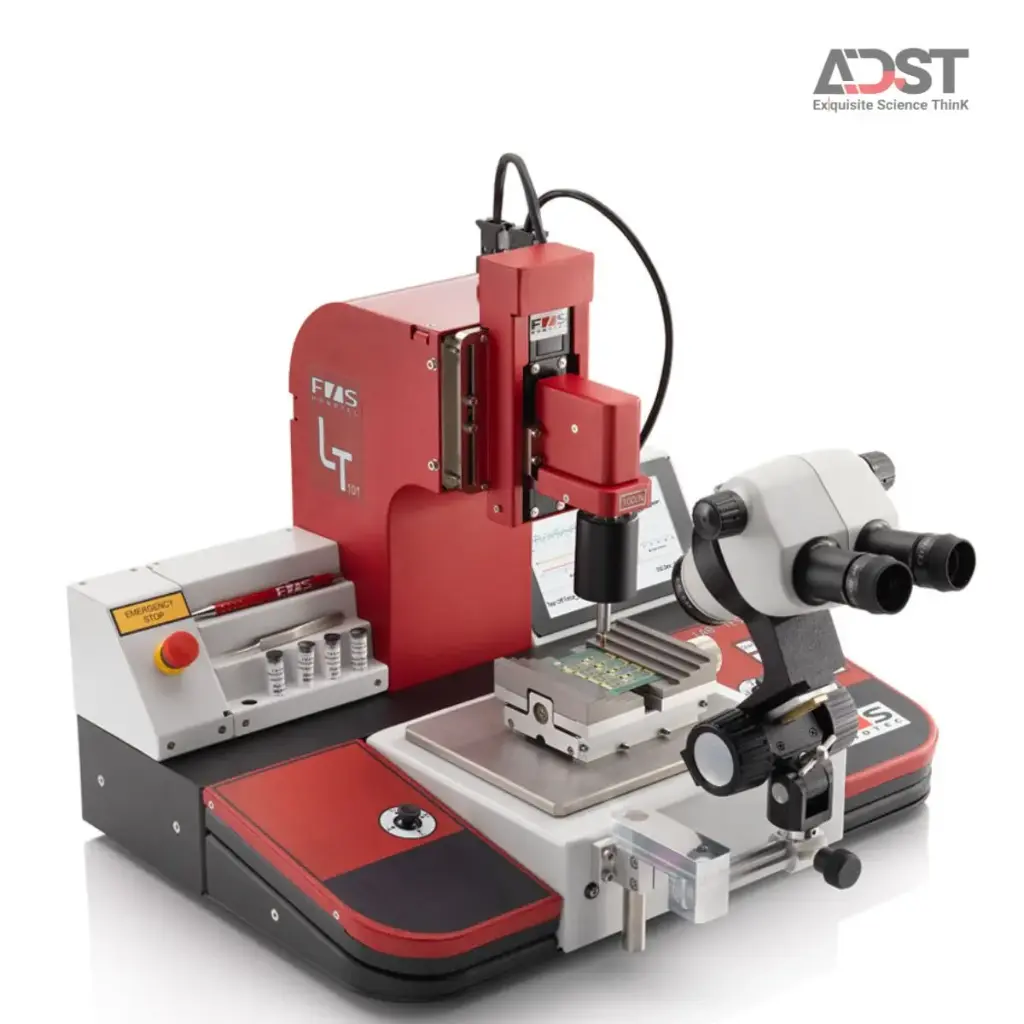
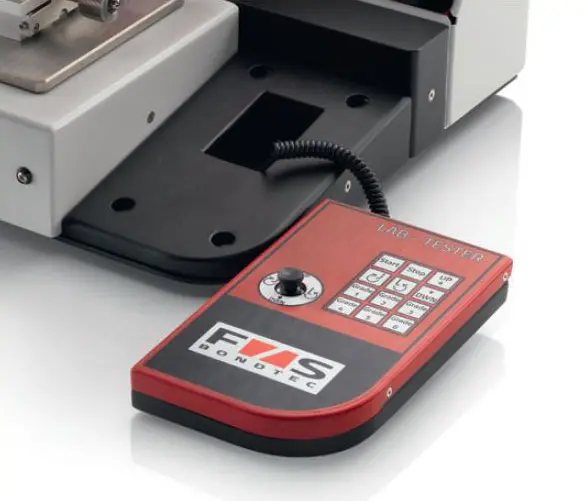
Ultra-compact desktop design: With a weight of only 22 kg, the device is a streamlined Pulltester that optimizes workspace for labs and production lines.
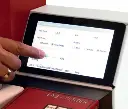
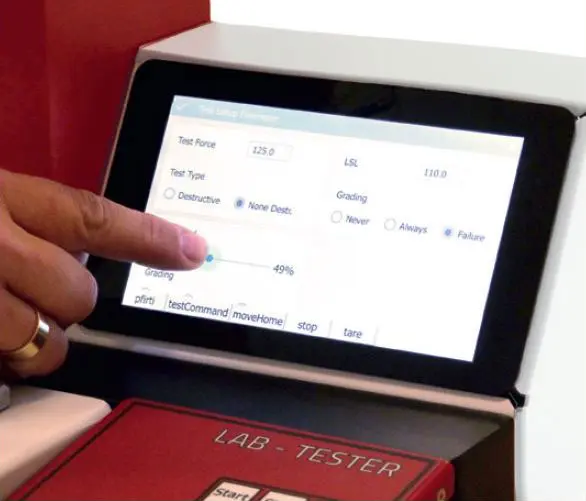
Intuitive operation with no training required: The machine integrates a 7" LCD touchscreen and a real-time operating system based on ARM, allowing for quick tensile testing with just a few actions.
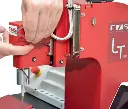
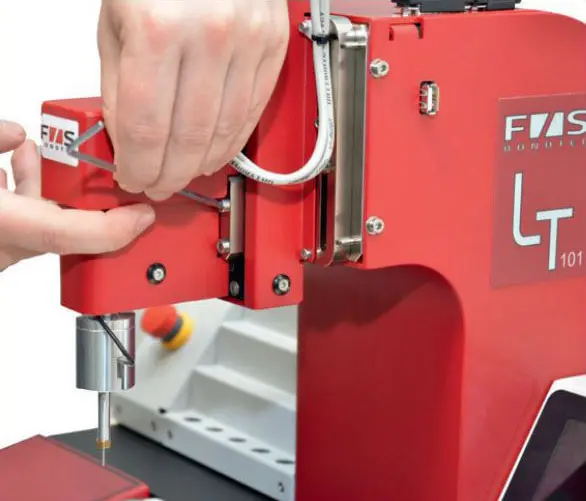
Flexible test head box: Easy switching between the LT-100 test head (fine wire, tensile force under 100g) and the LT-2000 (large wire, tensile force under 2000g) to accommodate various wire sizes.
Ultra-fine axis step resolution: The mechanical motion system achieves a step resolution of less than 1μm, providing extremely high accuracy (+/-0.25%) when recording the tensile force of welds.
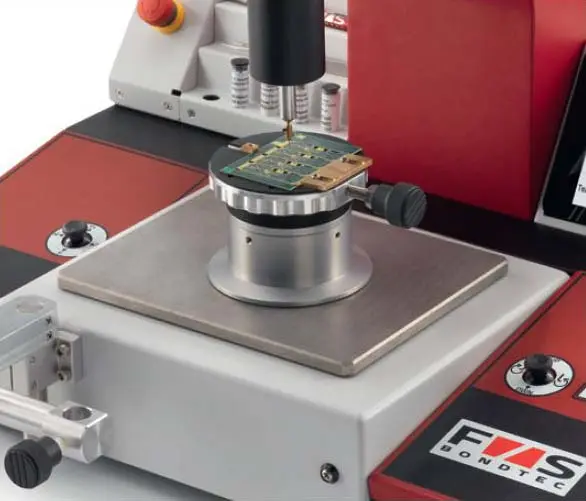
Diverse sample holding system: Fully supports standard fixture sets (Standard, DIL, jaw clamps, TO socket) and optional vacuum bases, ensuring secure fixation of all types of components.
Integrated advanced optical testing: Allows for the additional upgrade of the optical camera system OI-101 helps to zoom in and observe directly, accurately the position of the weld before testing
Detailed description
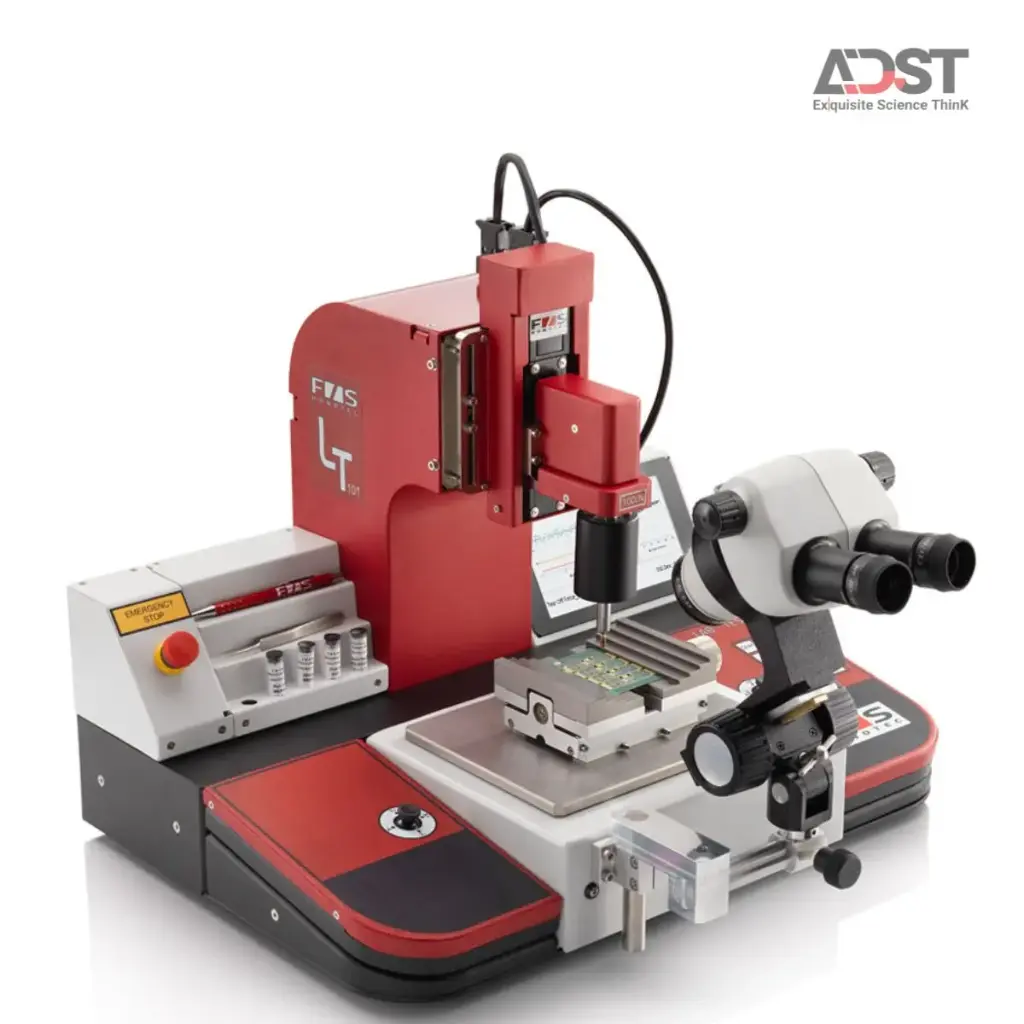
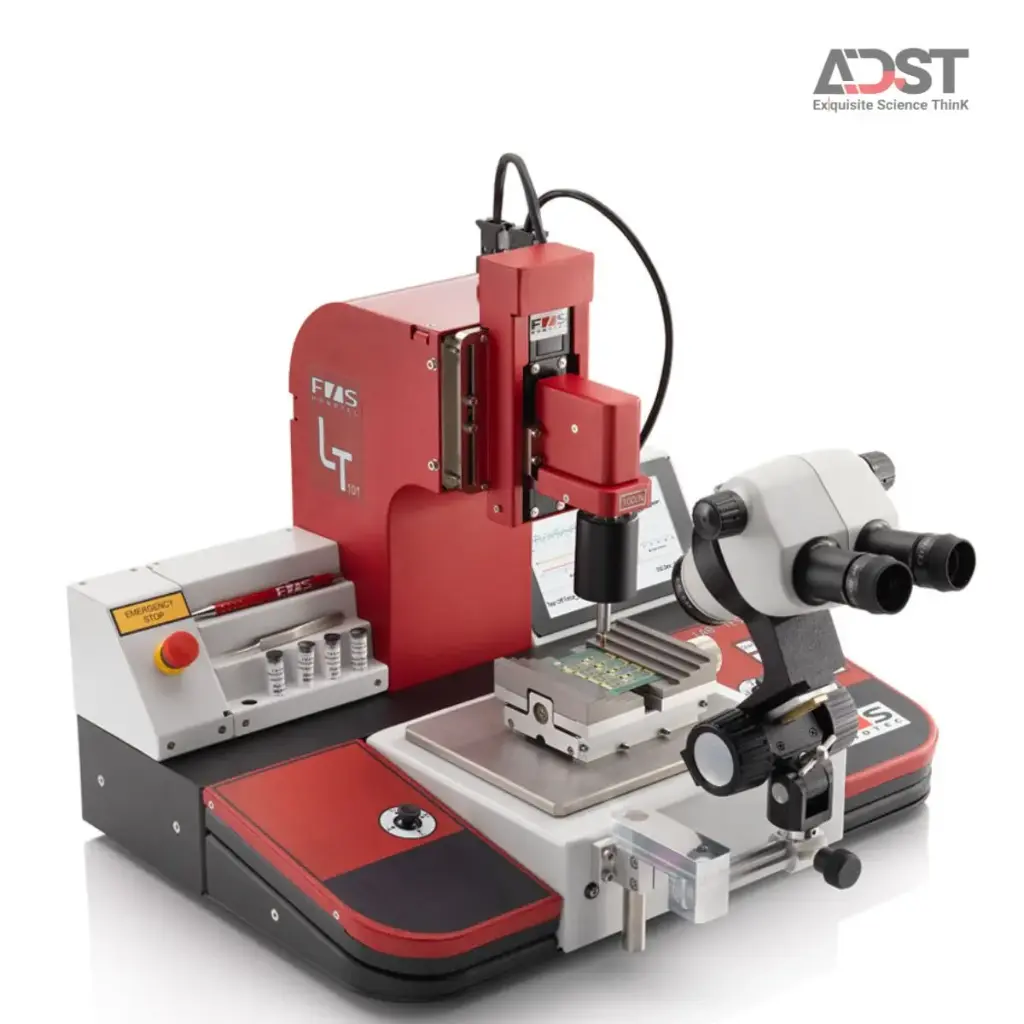
LT-101 is a pull testing device for welds (Pulltester) with a compact desktop design. The machine is specialized for both destructive and non-destructive testing applications for both thin wire and heavy wire/power ribbon.
Axis System: The working area of the X/Y axis achieves a travel of 40 × 40 mm with a motion resolution of < 1 µm. The Z axis has the capability for automatic lifting by a 40 mm motor, while also supporting manual fine-tuning for an additional 60 mm to optimize the working space for components of varying heights.
The heart of the system is a high-performance ARM embedded processor operating on a real-time operating system (Real-time OS), enabling precise instantaneous breakage force calculations. The machine features a 7" Touch LCD touchscreen along with a full range of modern connectivity options: Ethernet, USB 2.0, and Bluetooth.
The system allows for flexible switching between the LT-100 test head (maximum pulling force 100 g for thin wire) and LT-2000 (maximum pulling force 2000 g for thick wire). Both achieve superior high accuracy ±0.25% across the entire measurement range.
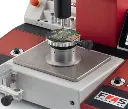
Providing a variety of standard mounting brackets such as flat type (Standard), dual in-line package (DIL), fixed jaw type (with jaws), through-hole component type (TO), and specialized vacuum-base mounting brackets in conjunction with the LT-2000 measuring head.
LT-101 operates on the pull-off mechanism for wire bond quality testing (Wire Bond Pull Testing). When a pull-hook moves down under the wire bond loop, the Z-axis automatically moves up to tension the wire until the bond breaks or the wire completely snaps.
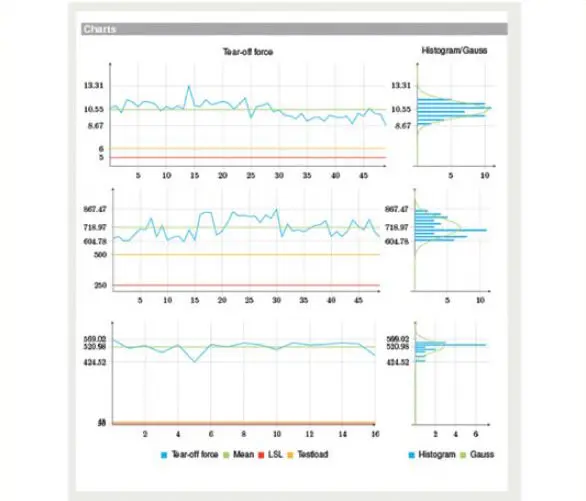
Throughout this process, the load cell sensor on the LT-100/LT-2000 continuously records data in real-time. The high-speed pulse processing algorithm of the ARM chip will capture the "peak force" at the moment of failure. The results of the tensile force graph and the fracture state will be visually rendered, serving for the analysis of whether the weld meets standards or has defects (such as pad peeling, wire breakage).
Space optimization and operation "Unboxing is running": Unlike the bulky, expensive universal testing systems of major competitors that require external computers and complex adjustments, the LT-101 is an all-in-one solution. The integrated 7-inch screen allows engineers to operate directly, performing quick and easy pull tests right on the production line without the need for extensive training.
The stability of the real-time operating system (Real-time OS): Unlike Windows-based systems that are prone to delays or software conflicts, the closed-source embedded system from F&S Bondtec ensures that force data collection does not miss any milliseconds, providing a repeatability and accuracy of ±0.25%.
Accurate direct observation capability: The optical inspection system option OI-101 is a major plus. It completely eliminates the need for engineers to look sideways through a conventional microscope, making it extremely precise to center the hook into the wire loop, minimizing errors.
Workholder ecosystem: The availability of fixture modules from Standard, DIL, TO to Vacuum-Base allows for flexible switching between product lines (from small ICs to large power modules) in just a few minutes.