


Key features
- High energy resolution allows for the separation of complex gamma spectral peaks.
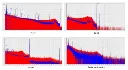
- Reduces Compton scattering noise by more than 10 times depending on the energy range, increasing peak spectral contrast and measurement sensitivity.
- Provides the ability to perform non-destructive analysis of elements in samples in real-time, allowing for immediate analysis.
- Robust design and user-friendly interface. Advanced software provides intuitive data interpretation capabilities, easy to use.
- Flexibly meets testing requirements from mining, cement production, environmental monitoring to in-depth geological research.
Detailed description
Technology & Principles
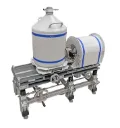
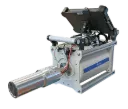
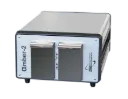
The BSI PGNAA Spectrometer is an instant, non-destructive elemental analysis system optimized for bulk materials (bulk materials). The device operates based on the principle of Prompt Gamma Neutron Activation Analysis, allowing for real-time instant analysis. The system can detect a wide range of elements, including trace elements, with superior accuracy.
Reduction of scattering noise and active shielding
Completely overcomes the phenomenon of low energy spectral peaks being obscured by the continuous Compton spectrum through active shielding mode, helping to reduce Compton background noise by more than 10 times (depending on the selected peak energy range) and significantly enhancing peak clarity.
Instant non-destructive analysis
Eliminate the complex sample preparation step that alters the physical and chemical properties of the material thanks to the ability to perform direct real-time analysis, providing instant data for decision-making in process control.
Integration/ Expansion:
Possessing a flexible design that can be actively assembled and disassembled, equipped with precise position adjustment mechanisms. The machine's software integrates smoothly into the existing workflow control system, providing comprehensive application expansion capabilities for various fields: mining and geological exploration, environmental control (soil and water), agriculture (fertilizer optimization), petrochemical industry (oil and derivative testing), pharmaceutical production, recycling, and academic research facilities.