
Main features
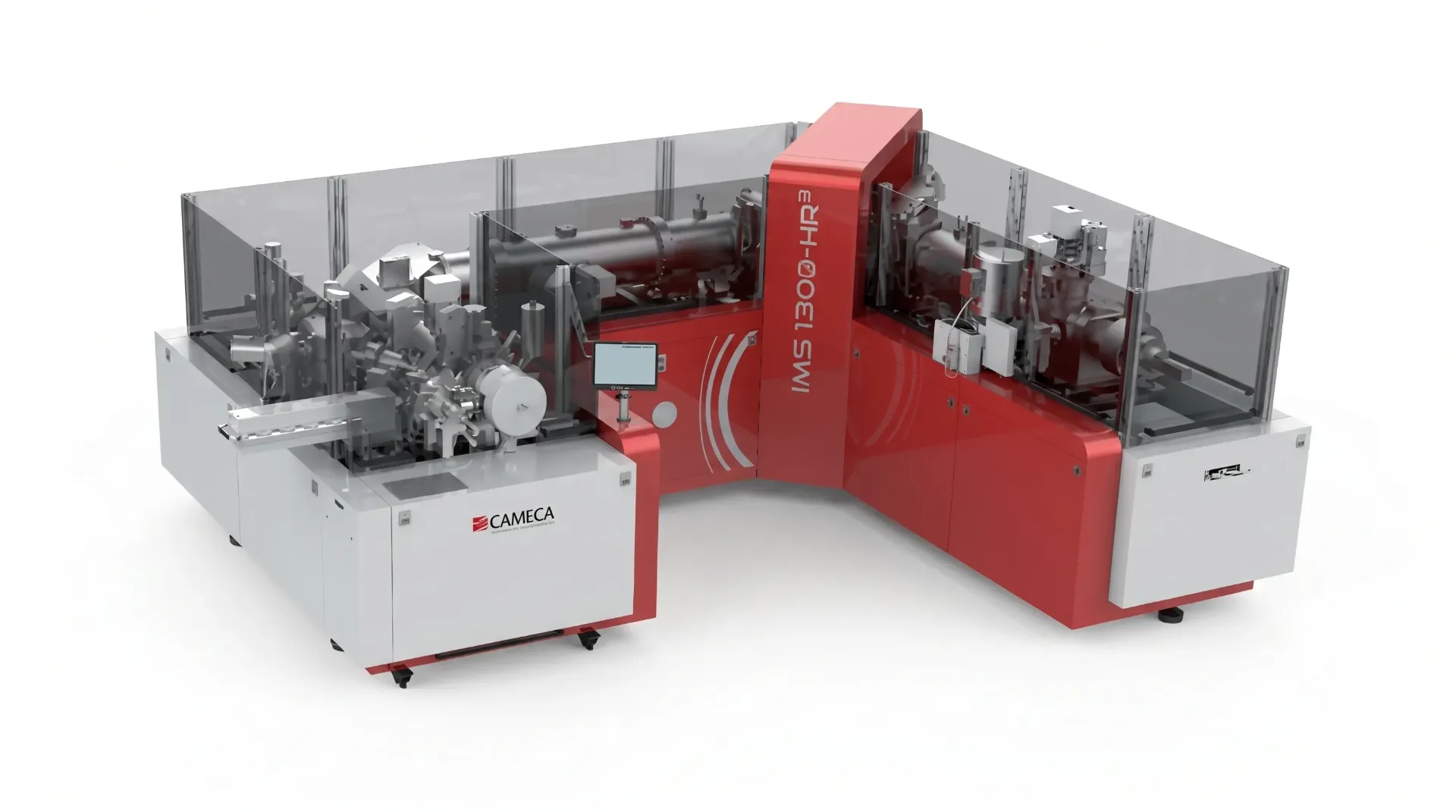
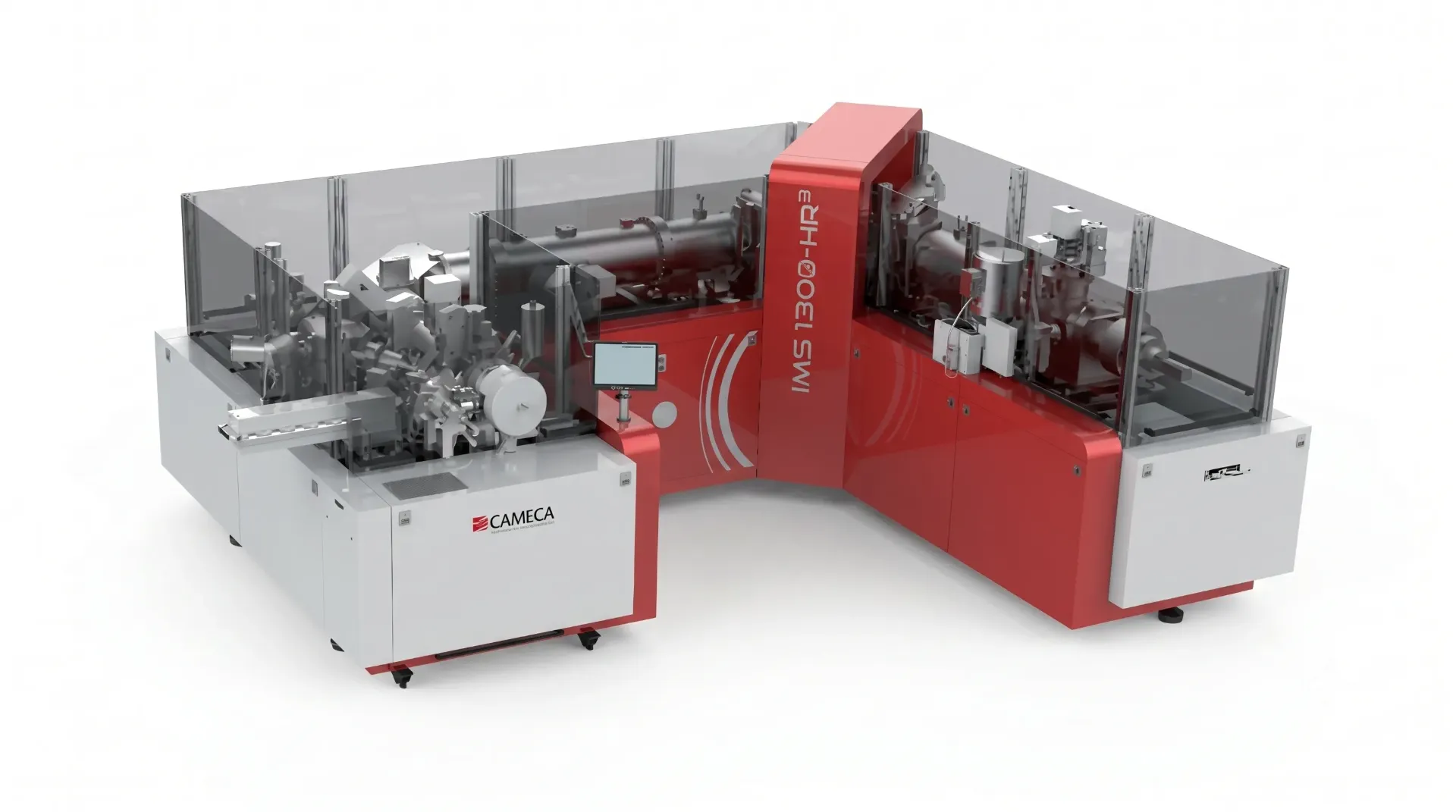
- Large Geometry SIMS design (LG-SIMS): Thoroughly optimizes signal sensitivity even at extremely high mass resolution, completely eliminating background noise.
- Flexible multi-collector system: Integrates up to 7 parallel signal detection units (Faraday Cup and Electron Multiplier) for extremely fast and accurate analysis of multiple isotopes simultaneously.
- Ultra-sensitive 10¹² Ω electrometer: Equipped on Faraday cup circuit boards to eliminate electromagnetic noise, ideal for measuring low‑count‑rate signals in materials.
- High-density dual ion source: Integrates RF oxygen plasma source and cesium microbeam source to provide strong brightness, enhancing beam density to significantly improve data repeatability and throughput.
- High-throughput automation: The motorized sample chamber comes with automatic Z‑axis height alignment, maintaining a fixed operating distance and allow unattended analysis of large sample sets.
- UV microscopy optical positioning: Significantly upgrade surface resolution using ultraviolet (UV-light) microscopy, optimizing the navigation and positioning of sensitive points on materials.
Detailed description
Advanced Large Geometry SIMS technology
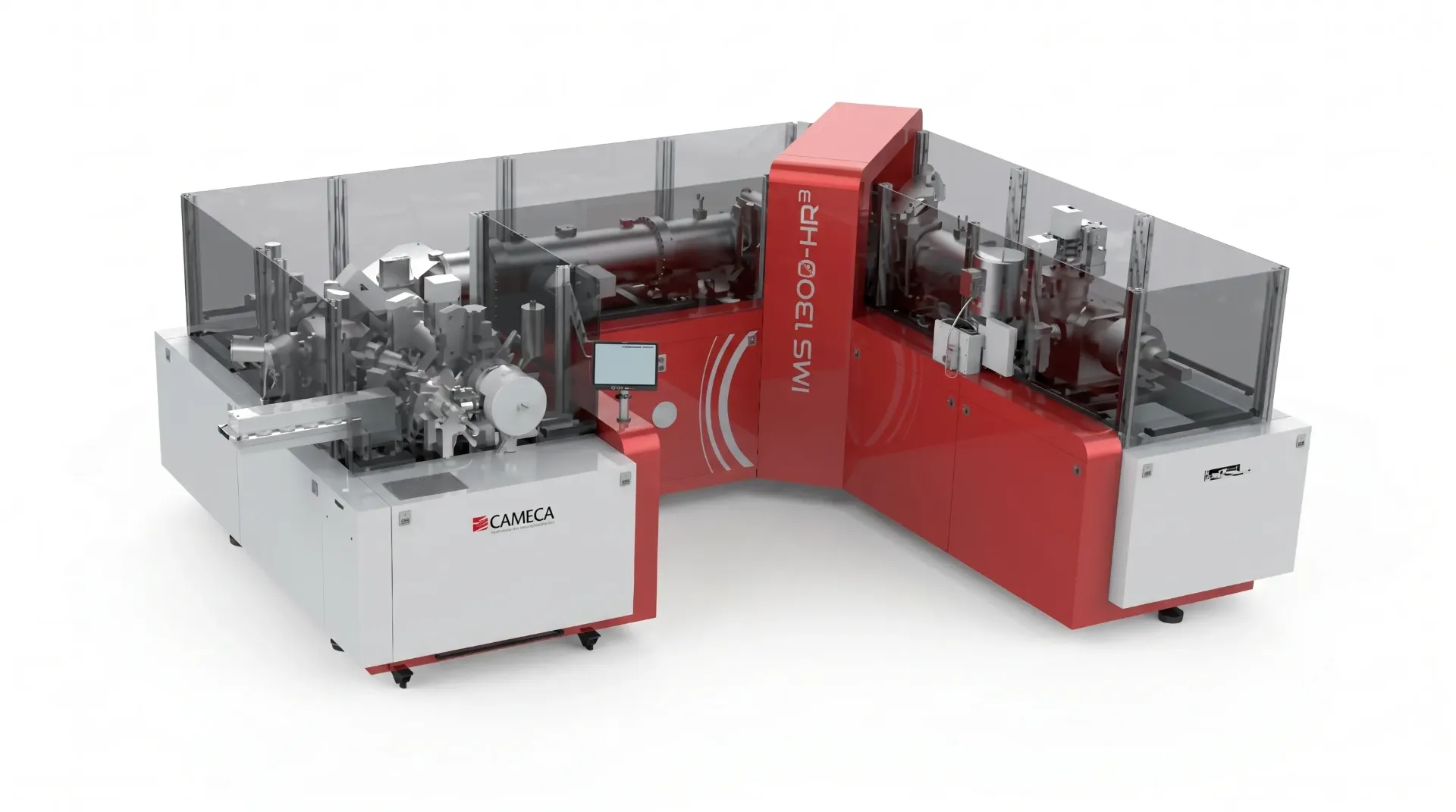
CAMECA IMS 1300-HR³ marks a powerful breakthrough in the platform of large configuration secondary ion mass spectrometry equipment. Unlike conventional analytical systems, the IMS 1300-HR³ combines a high-density primary ion source with a large‑magnet sector field design, providing unmatched sensitivity and mass resolution. Additionally, the system is equipped with a normal-incidence electron gun that creates an electron flood for optimal charge compensation, maintaining ultra-stable signals on the surface of insulating materials in ultra-high vacuum (UHV) environments.
Eliminating barriers to micro-particle measurement and trace isotope analysis
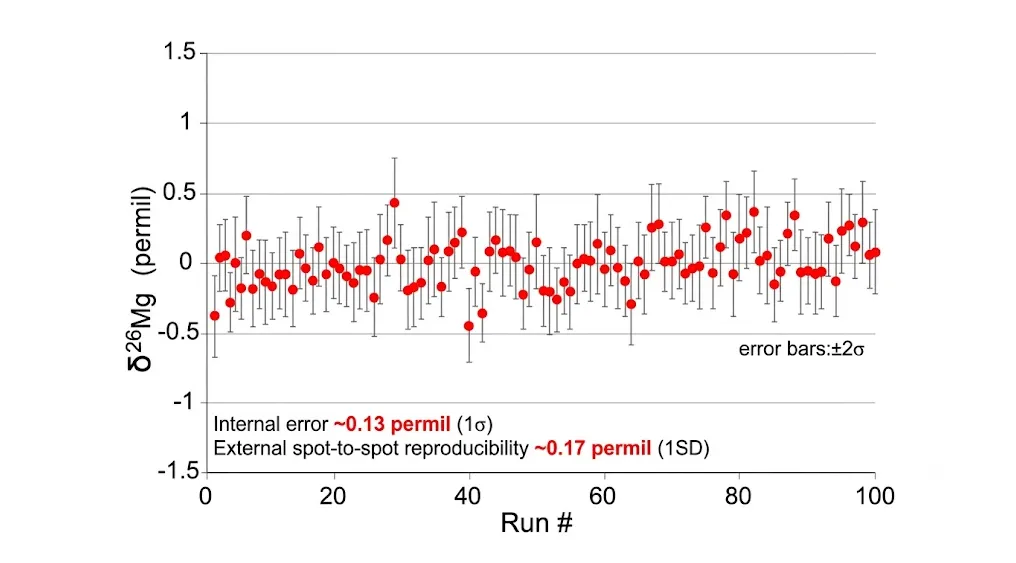
Collecting accurate isotope information or analyzing trace elements at ppm levels has always been a time-consuming challenge in geochemistry. The IMS 1300-HR³ thoroughly addresses this difficulty through excellent 2D and 3D imaging capabilities in both microprobe and microscope modes. Samples are positioned at a sub-micron level, meeting the most stringent requirements for measuring ancient minerals (U-Th-Pb), studying stable isotopes (C, O, S, Mg...), or detecting Uranium for nuclear security applications.
Maximizing automation capabilities and data management
The system allows for a efficient processing of large analytical volumes thanks to the built-in comprehensive automated software platform. The heart of the system's software is the APM (Automated Particle Measurement) tool, which has the ability to self-identify, filter, and quantify isotopes on millions of ultra-fine particles in an instant. The data is then directly visualized using WinImage and Geochronology, minimizing data processing time and ensuring highly accurate results.