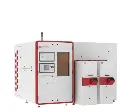

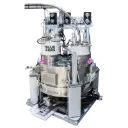
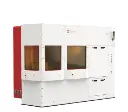


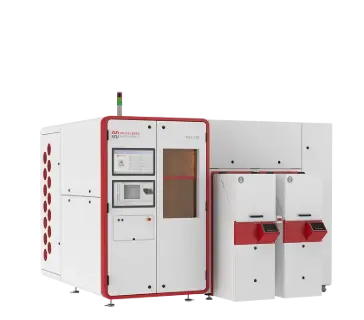
Main features
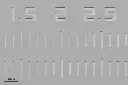
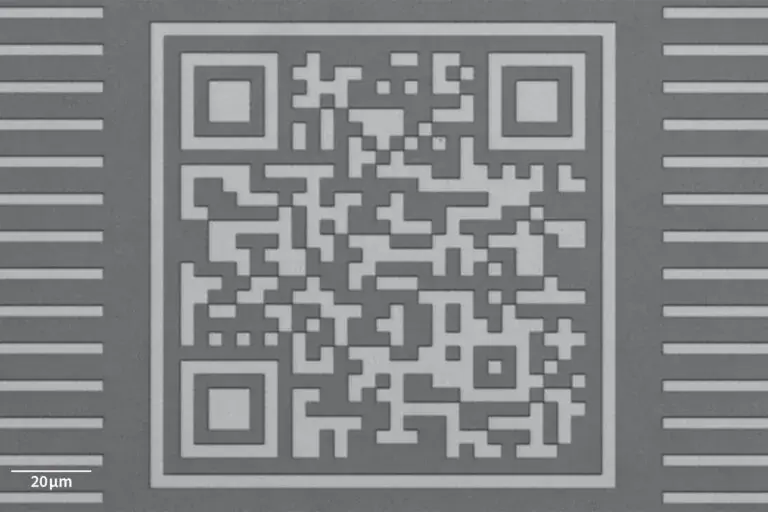
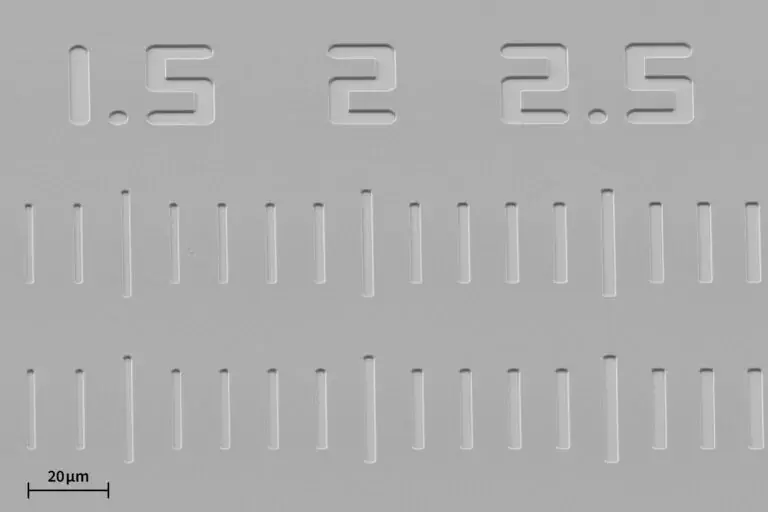
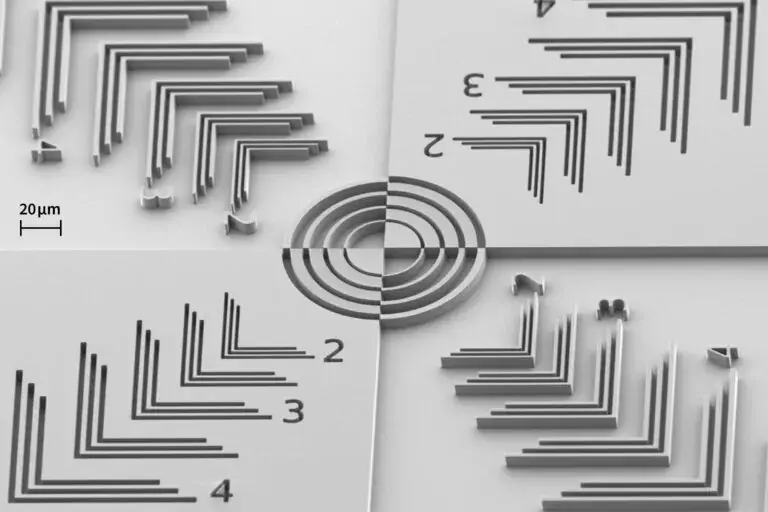
- The highest throughput in the Heidelberg Instruments line, resolution of 1.5μm
- Maskless Aligner technology with SLM (Spatial Light Modulator) – dynamic mask
- Dynamic distortion correction for each substrate
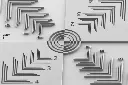
- Real-time automatic focusing, compensating for warp and surface waviness
- Automatic loader system, configurable, integrated with Cognex and SECS/GEM
- Frictionless airbearing table – high speed, high precision, durable
- High-lifetime diode laser, non-consumable materials, low ownership costs
Detailed description
Technology & principles
The MLA 300 uses SLM as a dynamic mask, projecting directly from digital data, each die has its own correction pattern. Integrated Cognex camera for alignment recognition and automatic focusing using pneumatic or optical methods.
Limitations of traditional lithography
- Every design change requires new mask creation.
- With FOWLP applications, the chip is attached to the wafer after cutting, so the position of each die is randomly shifted – physical masks do not respond.
- High mask costs, plus additional maintenance, storage, cleaning.
- Thin ceramic/wafers substrate warping causes loss of definition, leading to CD (critical dimension) errors, the system often does not compensate for warp well.
Advantages of the MLA 300 maskless lithography system
- No mask – data file editing, reduced from weeks to a few hours.
- Dynamic correction for each die: taking images, calculating offsets (X, Y, rotation, shear deformation), projecting individual patterns.
- Saves mask costs + storage; high lifespan laser diode.
- Real-time auto-focus adapts to curved surfaces ±80μm, uniform across thin ceramic/wafers.
Integration & expansion
SECS/GEM, custom chuck, compatible with ISO 6 cleanroom.