

X-Tomography Synchrotron
Synchrotron X-ray tomography is based on detecting the attenuation or phase shift of the beam passing through a sample. While X-ray imaging measures for one direction of the sample, tomography measures for many different angular positions. This results in a set of projections that can be used to reconstruct two-dimensional layers or slices through the object. By stacking these slices together, the structure can be visualized in three dimensions.
The X-ray beams generated by synchrotron provide the following advantages:
- The very high intensity of the source provides images with a high signal-to-noise ratio over a short time scale, allowing for rapid X-ray examination.
- The beams can be easily monochromatic. This allows for the establishment of a correlation between attenuation values and the chemical composition of the sample.
- The option to change the energy of the radiation allows for the examination of objects with very different absorption coefficients in the same measurement environment.
- The high collimation of the beam limits stray images.
- The high continuity of the beam can be used for phase contrast imaging and tomography, providing much higher image contrast.
Kỹ thuật Micro CT
Micro-CT is a 3D imaging technique that uses X-rays to look inside an object, slice by slice. Micro-CT, also known as micro-computed tomography or micro-CT scanning, is similar to hospital CT scans or CAT imaging but on a smaller scale with significantly increased resolution. Samples can be imaged with pixel sizes as small as 100 nanometers, and objects can be scanned with diameters up to 200 mm.
The Micro-CT scanner captures a series of flat 2D X-ray images and reconstructs the data into 2D cross-sectional slices. These slices can be further processed into 3D models and even printed as physical 3D objects for analysis. With a 2D X-ray system, you can see through an object, but with the power of the 3D micro-CT system, you can see inside the object and reveal its internal features. It provides volumetric information about the microstructure, unstructured.
How does a micro-CT scanner work?
X-rays are generated in the X-ray source, transmitted through the sample, and recorded by the X-ray detector as 2D projection images. The sample is then rotated a fraction of a degree on the rotating stage, and another X-ray projection image is taken. This step is repeated through a 180-degree rotation (or sometimes 360 degrees, depending on the type of sample). A series of X-ray projection images are then computed into cross-sectional images through a computational process called Reconstruction. These slices can be analyzed, further processed into 3D models, rendered into films, printed into physical 3D objects, and more.
What does non-destructive testing mean?
Non-destructive testing (NDT) means that the sample or specimen being scanned is not altered or destroyed during the testing process or during the preparation for testing. This allows the sample to be preserved to record history, to be re-examined at a later date, to be used in another test, or to be incorporated into final production. Some other techniques require staining, cutting, or coating the sample, which may affect the sample's structure, continuous usability, or its use in later studies. There are several techniques that allow samples to be photographed in their natural state, including optical microscopy, laser scanning, spectral imaging, and other visible observations, etc. Micro-CT is one such technique in which most samples studied are scanned in an unchanged state.
What are the advantages of micro-CT scanning?
Micro-CT provides high-resolution 3D imaging information that can be obtained by any other non-destructive technology. It can be used to study the internal structure of both material samples and biological samples without cutting the sample, preserving the sample, or preparing samples for future studies. The quantitative information obtained from micro-CT scans can only be derived from 3D images and 3D digital models created from virtual micro-CT slices, allowing scientists to measure any parameters for comparison in before-and-after studies.
These unique features of micro-CT scanning allow scientists to examine the morphology of samples and research characteristics such as: porosity, bone structure/thickness, mass fraction, defect analysis, density, particle size, voids, fiber orientation, etc., using micro-CT to study bones, teeth, tissues/organs, composite materials, medical devices, batteries, etc.
What is the difference between medical CT and micro-CT scanning?
CT imaging has many applications: in medicine, in Materials Science as well as Life Science.
Micro-CT scanning is 3D X-ray imaging, using a method similar to medical CT scanning (or CAT), but micro-CT is on a much smaller scale with greatly increased resolution. Medical CT scanning was introduced as a tool for medical imaging in the 1970s; CT scanning (or computed tomography) is limited to a resolution of 1 millimeter, providing sufficient detail for clinical use. For materials science and small animal imaging, much higher resolution is needed and micro-CT scanning was introduced in the 1980s. Micro-CT scanners can operate at a level of one micron, one thousandth of a millimeter and smaller.
What is the difference between in vivo and ex vivo scanning?
Simply put, in vivo (Latin for in the living) refers to scanning living specimens and ex vivo (Latin for out of the living) typically refers to things that once existed or samples taken from something that is still alive. For micro-CT, in vivo usually refers to systems scanning mice and rats and in some cases rabbits, while ex vivo systems typically handle the rest of the applications.
With in vivo micro-CT instruments, since the animals are still alive, longitudinal studies can be conducted to measure the effects of drugs, diet, hormones, and other treatments on tumors; growth and bone quality; body mass; and other applications within the same subject. This can reduce the number of animals needed for a study.
Ex vivo micro-surgical devices typically handle remaining applications, including endpoint studies on specific regions of excised animals (lungs, bones, tumors, grafts, transplants, etc.), biomaterials research, large animal grafting, research materials, compression studies, and much more. Ex-vivo micro-CT devices allow for higher spatial resolution, longer scan times (due to dose concerns for the sample), better signal-to-noise ratios, and thus better imaging. Ex vivo systems are often used for most applications outside of living animals.
What is nano technology or nano-CT scanning?
Nanotomography (nano-CT) is similar to micro-CT and medical CT scans but at a resolution measured in nanometers instead of microns or mm. The nano-CT of Sigray uses a nano-focused X-ray source to capture 2D images during a 180 or 360-degree rotation of the sample. Advanced software is then used to convert those images into 2D cross-sections or slices through the sample. These cross-sections provide the researcher with the opportunity to look inside the sample without having to cut it open. The smaller the focus of the X-ray source, the higher the resolution that can be achieved on the sample scan. Nano-CT is crucial for observing details optimally without destroying the sample.
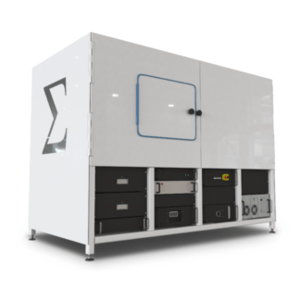
Figure 1. The NanoCT device with the highest resolution currently available (40nm) from Sigray
Sigray X-ray Synchrotron Optics
X-ray Synchrotron Optics Sigray customized for your beam requirements. X-ray mirror lenses of elliptical and paraboloid types.
Main features:
- Throughput greater than 8 times that of KB mirrors
- Sharp focusing of X-rays from 20 keV down to 10 eV
- Highly suitable for low-energy X-rays
- Lightweight and in-line optics
Applications:
- Develop or upgrade new beam (replace KB)
- ARPES, nano, microprobes
X-ray computed tomography solution of ZEISS
- ZEISS your material's properties and behavior non-destructively.
- Reveals details of the microstructure in three dimensions (3D).
- Develop and validate models or visualize structural details.
- Achieve high contrast and submicron resolution images even for relatively large samples.